8th IEEE Summer School on Antennas, Propagation and RFID Applications
Faculty of Electronics, Telecommunications and Information Technology
POLITEHNICA Bucharest, Romania
8-9 September 2026
Faculty of Electronics, Telecommunications and Information Technology
POLITEHNICA Bucharest, Romania
8-9 September 2026
On behalf of the National University of Science and Technology POLITEHNICA Bucharest (UNSTPB) and the IEEE Romania Section, the Organising Committee warmly invites you to join the 8th IEEE Summer School on Antennas, Propagation and RFID Applications, to be held at the Faculty of Electronics, Telecommunications and Information Technology, POLITEHNICA Bucharest, Romania, from 8-9 September 2026.
The Summer School addresses students and young researchers, and provides lectures and hands-on activities delivered by academics and industry specialists active in antennas, propagation, RFID, and related radio-frequency technologies. Building on seven previous editions, this 8th edition brings the event to Bucharest for the first time, continuing the tradition of high-level teaching combined with informal exchange between lecturers, students, and coordinators.
It is also a place to meet new colleagues, discover shared interests, and begin new projects!
Our Summer School will be held in Bucharest, Romania's capital - a cultural destination, economic hub, and fascinating architectural landscape where rich history and traditional flavours meet modern dynamism.
Looking forward to greeting you in Bucharest in just:
The organising team wishes to acknowledge the below members for their contribution and commitment to the 8th IEEE Summer School on Antennas, Propagation and RFID Applications.






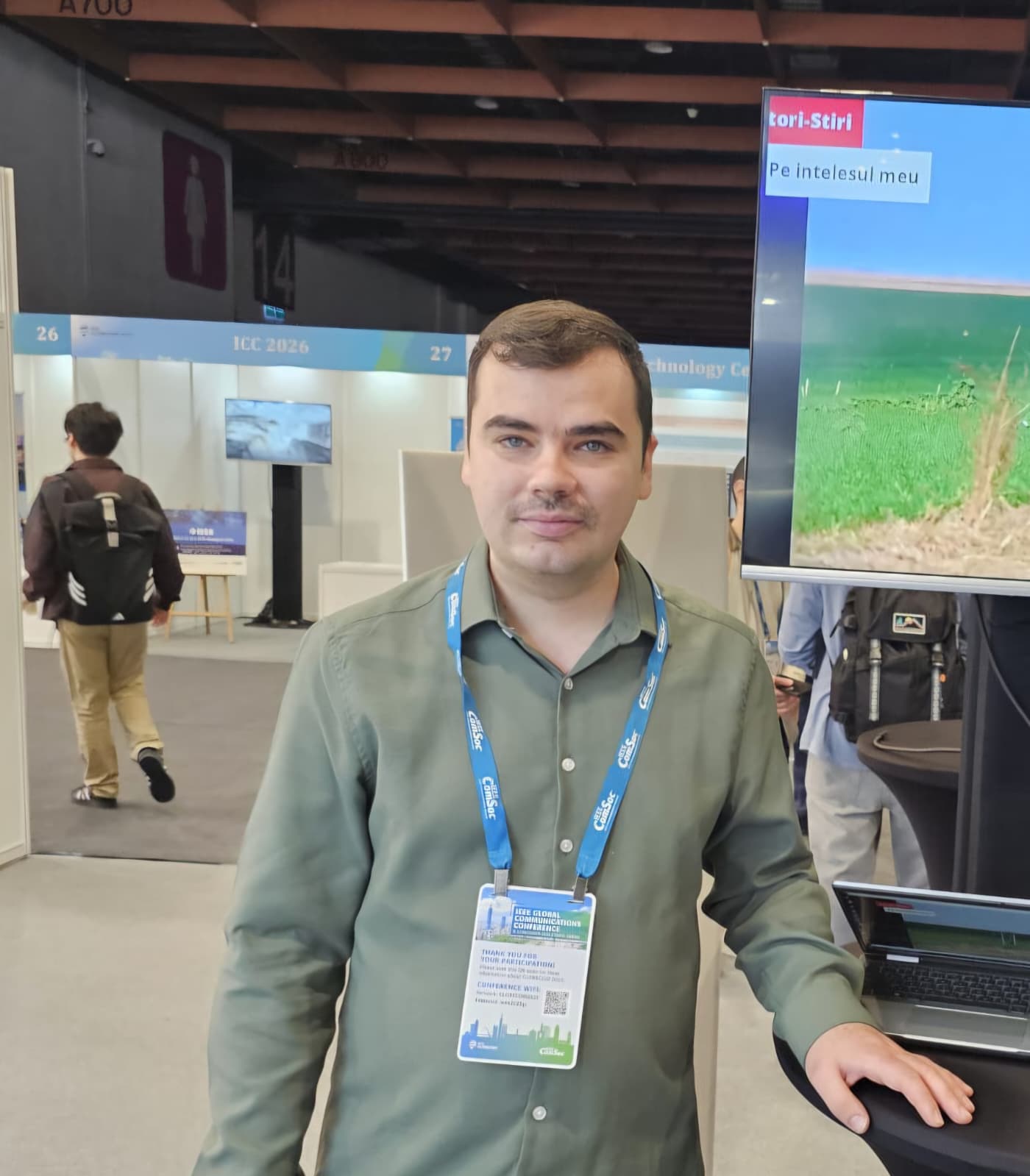
The 8th IEEE Summer School on Antennas, Propagation and RFID Applications brings together academics and industry specialists delivering lectures across antennas, propagation, RFID and related RF technologies.

Advanced RF Power Amplification and Combining Techniques for Modern Communications
Florin Alexa received his engineering degree in Electronics and Telecommunications in 1987 and his Ph.D. in 1999, both from Politehnica Timișoara, where he is currently Professor in the Communications Department. He has served as Scientific Secretary (2008-2012), Vice-Dean (2012-2016) and Dean of the Faculty of Electronics, Telecommunications and Information Technologies (2016-2020). His research covers audio and image processing, radio communication, antennas, and television systems.

Enhancement of 5G Systems using Massive MIMO and Beamforming Technologies
Cristina M. Andraș received her bachelor's (2020) and master's (2022) degrees from Politehnica Timișoara, and is currently pursuing her Ph.D. there, focusing on the enhancement of 5G systems using massive MIMO and beamforming technologies. She has been a Teaching Assistant in the Department of Communications since 2021, teaching Integrated Digital Networks and Mobile Networks, and led the implementation of a 5G platform using Nokia equipment in 2022.
Spaceborne transmitter/stationary receiver bistatic SAR imaging
Andrei Anghel (Senior Member, IEEE) received the engineering degree (valedictorian) and the M.S. degree in electronic engineering and telecommunications from the University Politehnica of Bucharest, Romania, in 2010 and 2012, respectively. He received the Ph.D. degree from the University of Grenoble Alpes, France, the Ph.D. degree (summa cum laude) from the University Politehnica of Bucharest, Romania, in 2015, and the habilitation degree in electronic engineering, telecommunications, and information technologies from the University Politehnica of Bucharest, Romania, in 2021. From 2012 to 2015, he was a Doctoral Researcher with GIPSA-lab, Grenoble, France. He is currently a Full Professor with the Telecommunications Department, National University of Science and Technology POLITEHNICA Bucharest, and a Researcher with CEOSpaceTech. Since 2016, he has been a Principal Scientist with EOS Electronic Systems, Bucharest, Romania. He has authored more than 110 scientific publications, two textbooks, and a book on SAR signal processing for infrastructure monitoring. His research interests include remote sensing, explainable AI for Earth Observation, radar, microwaves, and signal processing. He was awarded the Ad Astra Award for Research Excellence (2023), the Traian Vuia Prize by the Romanian Academy (2021), and two gold medals at the International Physics Olympiads (2005, 2006).

Linear Antenna Arrays
Remus Cacoveanu (Member, IEEE) received the M.S. degree in electronics and telecommunications from POLITEHNICA Bucharest in 1983, and the Ph.D. degree in microwave, optics, and optoelectronics from Institut National Polytechnique de Grenoble, France, in 1997. He is currently Associate Professor in Telecommunications at POLITEHNICA Bucharest. For more than ten years, he was Technical Lead of Redline Communications' Romanian branch, and between 2011 and 2015 was Technical Consultant for Blinq Networks Canada. Since 2016, he has also been Lead Scientist with EOS Electronic Systems, Bucharest. His research interests include wireless communication systems, antennas, radar sensors, propagation, and microwave circuits. He was awarded the Traian Vuia Prize by the Romanian Academy (2021).
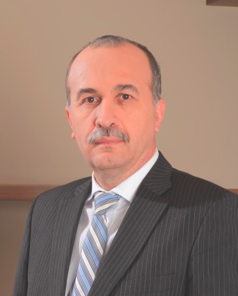
Trends in Science and Technology - Innovation Development Objectives
Dr. Cantaragiu, PhD in Electronics and Corresponding Member of the Academy of Romanian Scientists, has published widely, including "Microwave Numerical Solutions", awarded the Romanian Academy's "Tudor Tănăsescu" Prize in 2025. He formerly directed the Military Equipment and Technologies Research Agency, coordinating over 200 research projects, and represented Romania as a voting member on the NATO Research and Technology Board. He later served as Chief Technology Officer in the private sector, initiating numerous industrial innovation projects.
Introduction to Polarimetric SAR
Mădălina Ciucă (Member, IEEE) received the B.S. and M.S. degrees in electronics and telecommunications engineering from the University Politehnica of Bucharest, Romania, in 2017 and 2019, respectively. She obtained the Ph.D. degree in 2023 jointly with the University of Grenoble Alpes, France, and the National University of Science and Technology Politehnica Bucharest, Romania. She is currently a researcher with Politehnica Bucharest, Center for Advanced Research on New Materials, Products and Innovative Processes (CAMPUS) Research Institute, and with CEOSpaceTech. Her research focuses on synthetic aperture radar (SAR) in Earth observation and radar signal diversity (e.g., polarimetric, bistatic) applications.
6G
Răzvan Crăciunescu (Member, IEEE) received the engineering, master's, and Ph.D. degrees in electronic engineering and telecommunications from POLITEHNICA Bucharest in 2010, 2012, and 2018, respectively. He is currently Full Professor at POLITEHNICA Bucharest, working in the fields of 5G/6G communication systems, the Internet of Things, cybersecurity, and wireless sensor networks. He coordinates the Future Networks 5G/6G Laboratory, the university's first R&D laboratory dedicated to 5G/6G, and has authored more than 60 publications in international journals, conferences, and book chapters.

Microstrip technology design and electromagnetic near-field characterization of metasurfaces by infrared thermography (joint lecture with Prof. Simona Miclăuș)
Ladislau Matekovits (Senior Member, IEEE) received his degree in electronic engineering from Institutul Politehnic din București and his Ph.D. from Politecnico di Torino, where he became Full Professor in 2017. Since 2020 he has also been Honorary Professor at Politehnica Timișoara. He has published more than 400 articles and received numerous international awards, including the 2019 ARA Medal of Excellence in Science. His research covers numerical analysis of printed antennas, metasurfaces, and bioelectromagnetic applications such as implantable and nano-antennas.

Microstrip technology design and electromagnetic near-field characterization of metasurfaces by infrared thermography (joint lecture with Prof. Ladislau Matekovits)
Simona Miclăuș is Full Professor at the "Nicolae Bălcescu" Land Forces Academy, Sibiu, specialising in electromagnetics, applied antenna systems, and bioelectromagnetic interactions and safety. Her research features pioneering work in high-resolution, non-invasive near-field mapping of metasurfaces using transient infrared thermography, cross-validated with electric-field analysis, alongside work on radar-based vital signs monitoring and human exposure to electromagnetic fields.

Mathematics of interference: From Sine Waves to Beam Synthesis
With a 25-year career spanning spectrum monitoring, Teodor Petrița coordinated Romania's first nationwide mobile coverage measurement campaign and launched the country's first public EMF measurement programme in 2007. Following a 2012 Ph.D. in antenna modelling, he moved into academia, where he now teaches signal processing and radiofrequency engineering, drawing on decades of field experience.

Direction Finding for Automotive Imaging Radar: Technologies, Algorithms, and Applications in Autonomous Driving
Filip Roșu received his M.Sc. in 2018 from University Politehnica of Bucharest, and his Ph.D. in 2022 on multistatic SAR for Earth observation and remote sensing at CEOSpaceTech, UPB. He is currently with NXP Semiconductors, Bucharest, where he leads SW innovation activities as an algorithm architect, with more than 20 U.S. patent applications filed since 2020 and multiple IEEE journal publications. His interests include massive MIMO radar, advanced signal processing, machine learning, and next-generation imaging radar for assisted and autonomous driving.

Antennas: fundamentals of radiation and characteristics
Dr.-Habil. Tamas received his Ph.D. jointly from University Politehnica of Bucharest and Institut Polytechnique de Grenoble, and his Habilitation from Institut Polytechnique de Grenoble. He is Professor and head of the Electronics and Telecommunications Department at Constanța Maritime University, and a Ph.D. supervisor at the National University of Science and Technology POLITEHNICA Bucharest. His interests include antenna measurements, numerical methods for electromagnetism, time-domain characterization, electromagnetic compatibility, and naval communication systems. He founded the IEEE AP-S Chapter and later the AP-S/RFID Joint Chapter in Romania in 2018, serving as its first Chair, and also founded the Romanian Association on Antennas and Propagation.
8-9 September 2026
📢 Updates:
Announcements about the school will be posted here.
Check the preliminary programme below, or download it in PDF.




The IEEE Summer School on Antennas, Propagation and RFID Applications attracts students and young researchers dedicated to advancing antenna, propagation, RFID and related RF technologies. As a sponsor, you'll have direct access to a community of engaged future engineers and researchers.





The IEEE Summer School on Antennas, Propagation and RFID Applications is now in its 8th edition. The 7th edition was held 27-29 July 2025 at the "Nicolae Bălcescu" Land Forces Academy, Sibiu, Romania.